
Vatsal Shah
Certified ScrumMaster® | Agile Technical Project Manager
Latest AI Model Updates: 7 Smart Changes for Leaders
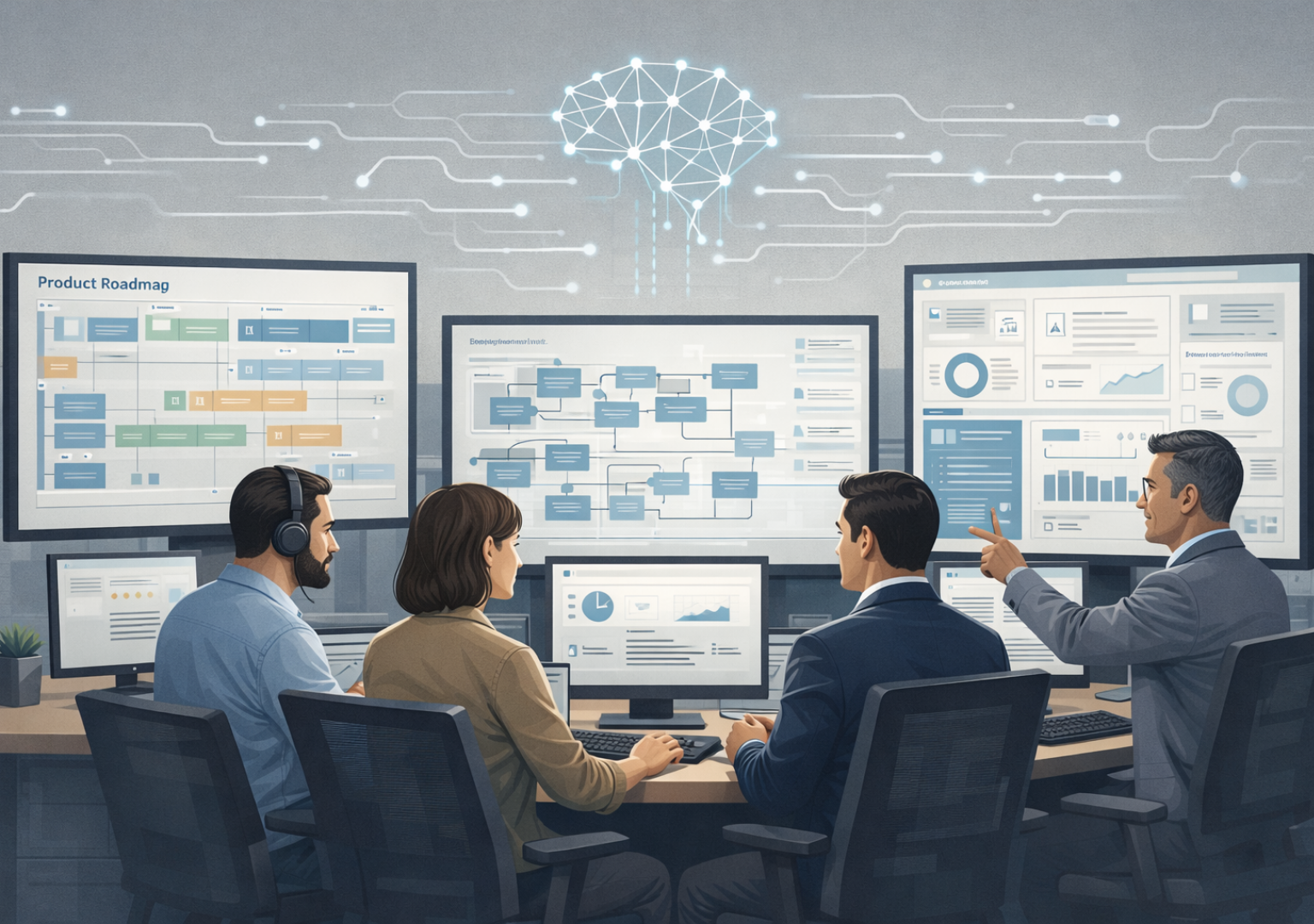
Latest AI model updates from OpenAI, Google, Microsoft, and Anthropic are quietly changing how product teams and tech leaders work.
These updates are not just about benchmarks. They affect product discovery, engineering workflows, and leadership decision-making in real environments.
In this guide, we break down latest AI model updates in a practical way for real teams.
They change how products are designed, tested, shipped, and governed.
This article looks at what these updates actually mean for product teams and technology leaders.
No hype. No predictions without grounding. Just practical interpretation.
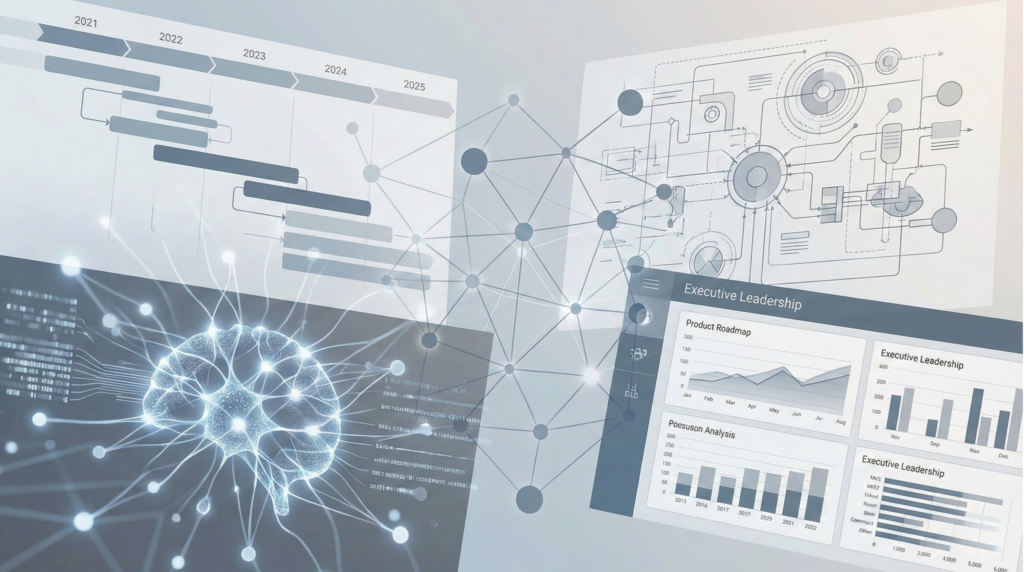
Latest AI Model Updates: What Changed in Practice
Recent AI model updates share a few consistent patterns across vendors.
First, models are becoming more capable at reasoning across longer contexts.
They can handle more information in a single interaction without breaking coherence.
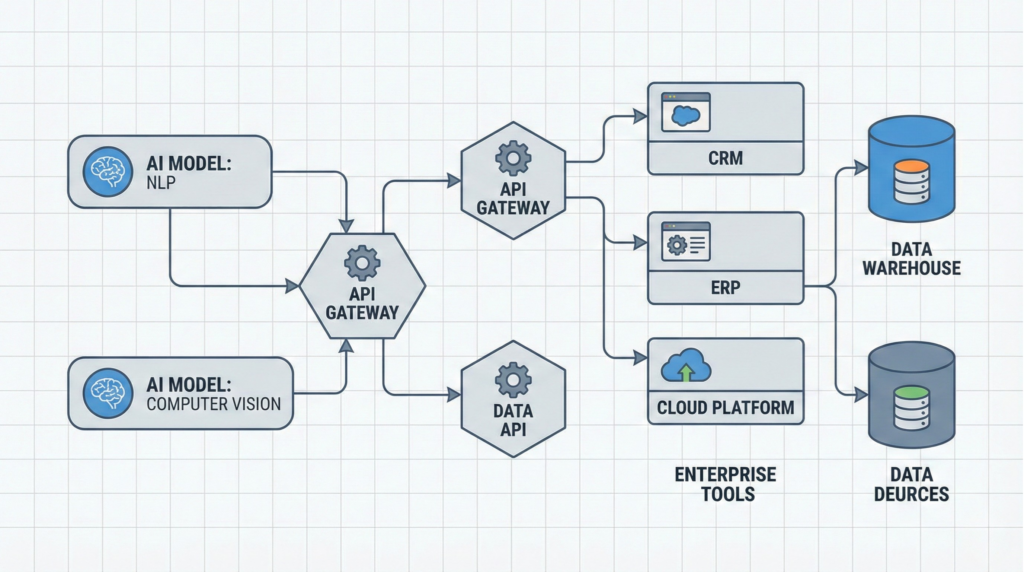
Second, tool usage and system integration are now core features.
Models are designed to work inside products, not just answer questions.
Third, cost and latency improvements matter more than raw intelligence.
Teams now optimize for reliability, predictability, and control.
Across vendors, latest AI model updates focus on reliability, context handling, and tool integration.
Finally, governance, safety, and enterprise readiness are no longer optional add-ons.
They are built into how these models are offered and deployed.
These shifts are subtle, but they directly affect how teams should think about AI adoption.
Why Latest AI Model Updates Matter Beyond Benchmarks
Benchmarks are useful, but they do not reflect real product conditions.
Product teams operate with:
- Incomplete data
- Ambiguous requirements
- Tight delivery timelines
- Multiple stakeholders
Modern AI updates focus on reducing friction in these environments.
For most teams, latest AI model updates matter because they reduce rework and improve operational consistency.
Better instruction-following reduces rework.
Improved context handling reduces prompt complexity.
More predictable outputs reduce QA overhead.
For leaders, this means AI is becoming operationally dependable, not just impressive in demos.
Latest AI Model Updates in Product Discovery
Product discovery is about learning fast with limited risk.
Recent AI model improvements help teams explore ideas earlier and cheaper.
Faster Concept Validation
Teams can simulate user journeys, feature explanations, and edge cases before building anything.
This reduces the cost of invalid ideas.
Improved Research Synthesis
AI now handles:
- Interview notes
- Feedback summaries
- Competitive comparisons
with more consistency.
This allows product managers to spend less time summarizing and more time deciding.
In product discovery, latest AI model updates help teams run faster, safer experiments.
Safer Experiments
Better control mechanisms make it easier to run limited experiments without exposing users to unstable behavior.
Real-life example:
A B2B SaaS team can now test onboarding copy variations using AI-generated flows before engineering commits sprint capacity.
Impact on Engineering and Delivery Workflows
Engineering impact is not about replacing developers.
It is about reducing cognitive load and coordination costs.
Code Assistance Has Stabilized
Recent updates emphasize:
- Context-aware suggestions
- Fewer hallucinated dependencies
- Better adherence to existing code patterns
This makes AI assistance more trustworthy in production codebases.
Documentation and Knowledge Access
AI can now act as a reliable interface to:
- Internal documentation
- Architecture decisions
- Legacy systems
This reduces onboarding time for new engineers.
Testing and Review Support
AI helps generate:
- Edge case tests
- Review summaries
- Refactoring suggestions
These are support functions, not decision makers.

Professional insight:
Teams that treat AI as a “junior reviewer” get more value than those treating it as an “autonomous coder.”
Latest AI Model Updates in Engineering Workflows
Engineering impact is not about replacing developers.
It is about reducing cognitive load and coordination costs.
Code Assistance Has Stabilized
Recent updates emphasize:
- Context-aware suggestions
- Fewer hallucinated dependencies
- Better adherence to existing code patterns
This makes AI assistance more trustworthy in production codebases.
Documentation and Knowledge Access
AI can now act as a reliable interface to:
- Internal documentation
- Architecture decisions
- Legacy systems
This reduces onboarding time for new engineers.
Testing and Review Support
AI helps generate:
- Edge case tests
- Review summaries
- Refactoring suggestions
These are support functions, not decision makers.
In delivery work, latest AI model updates reduce friction in reviews, testing, and documentation.
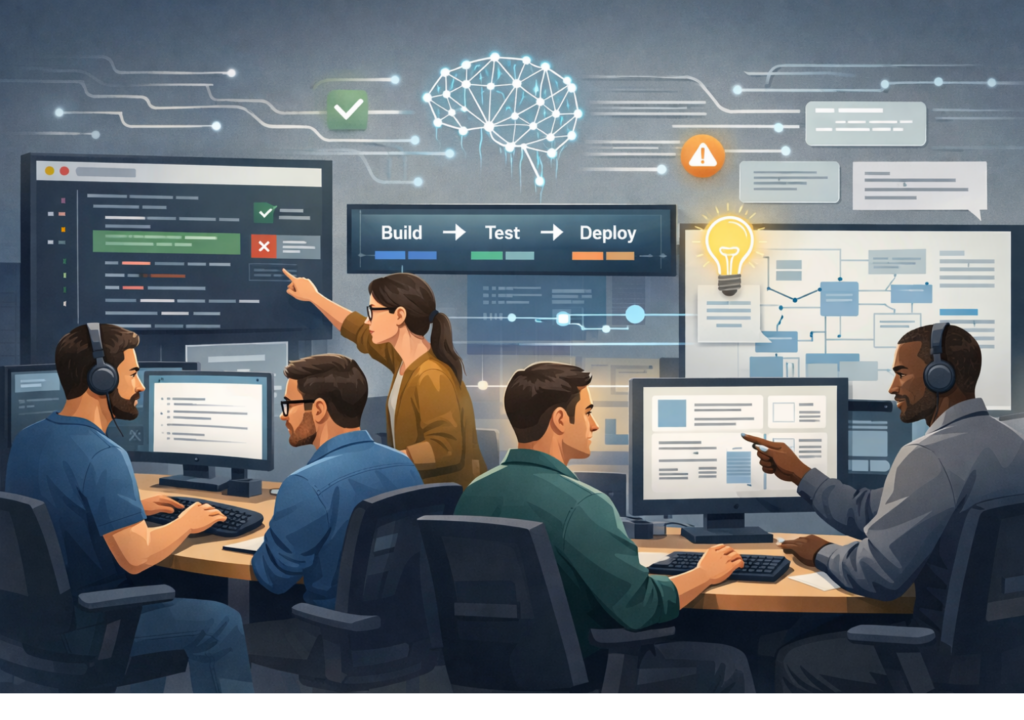
Professional insight:
Teams that treat AI as a “junior reviewer” get more value than those treating it as an “autonomous coder.”
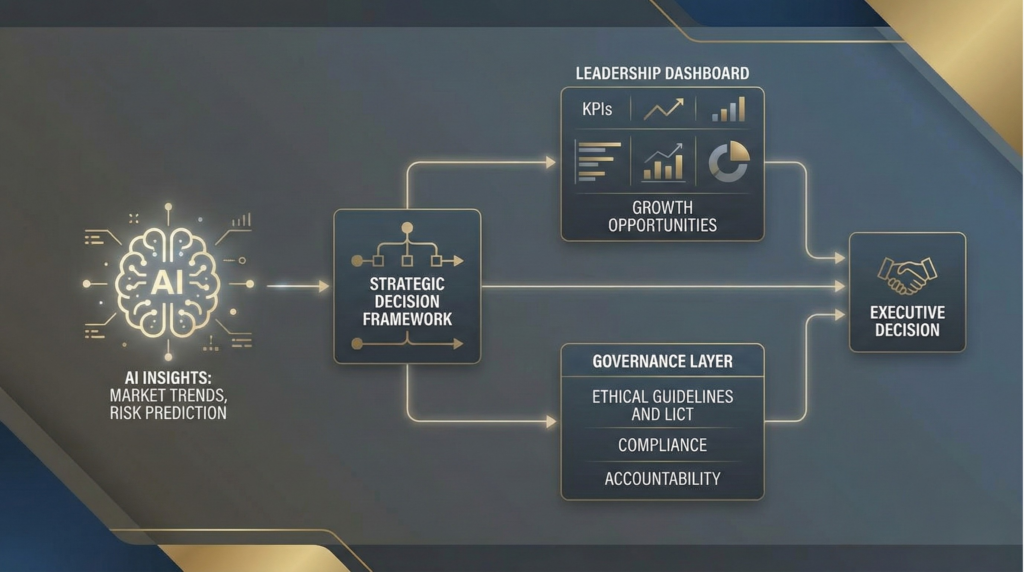
Leadership and Decision-Making Implications
For leaders, the biggest shift is where judgment sits.
AI can provide options, patterns, and summaries.
It cannot own accountability.
For leaders, latest AI model updates shift the focus from demos to governance and accountability.
Decision Compression
Leaders receive synthesized insights faster.
This shortens decision cycles but increases responsibility.
Talent Strategy Changes
AI does not reduce the need for strong talent.
It raises the bar for:
- Problem framing
- System thinking
- Ethical judgment
Governance Becomes Strategic
AI usage now touches:
- Data privacy
- Compliance
- Brand trust
These are board-level concerns, not tool choices.
Leadership takeaway:
The value of AI scales with leadership clarity, not technical ambition.
What Product and Tech Teams Should Realistically Do Next
The most effective teams focus on fundamentals.
A realistic next step is to pilot latest AI model updates in one workflow and measure impact.
1. Audit Current Workflows
Identify where time is lost:
- Documentation
- Reviews
- Research synthesis
Introduce AI only where friction already exists.
2. Standardize Usage Patterns
Create shared guidelines for prompts, reviews, and escalation paths.
Consistency matters more than experimentation volume.
3. Invest in Human Skills
AI amplifies:
- Clear writing
- Structured thinking
- Ethical reasoning
Train for these explicitly.
4. Measure Operational Impact
Track:
- Cycle time reduction
- Error rates
- Rework frequency
Avoid vanity metrics.
What Teams Should Not Overreact To
Some reactions create more risk than value.
Do not chase every release; latest AI model updates should be adopted only when they improve outcomes.
Do Not Chase Every Model Release
Incremental updates rarely justify workflow disruption.
Do Not Assume Autonomy
AI still lacks situational awareness and accountability.
Do Not Skip Governance
Early shortcuts become long-term liabilities.
Do Not Replace Thinking With Speed
Faster output does not mean better decisions.
Closing Summary
Recent AI model updates are not about disruption.
They are about stability, integration, and trust.
For product teams, this means better discovery and safer experimentation.
For engineers, it means reduced friction and clearer support.
For leaders, it means sharper decisions with higher accountability.
The teams that benefit most are not the fastest adopters.
They are the most deliberate ones.
Internal Links
- Vibe Coding & Product Growth
https://vatsalshah.co.in/vibe-coding-product-growth/
(How modern AI workflows influence product velocity) - All Blog Articles
https://vatsalshah.co.in/#blog
(More insights on AI, leadership, and technology)
External Authority Links
- Harvard Business Review – AI & Leadership
https://hbr.org - McKinsey – AI Strategy & Operations
https://www.mckinsey.com - Google Cloud – Responsible AI
https://cloud.google.com/ai
Frequently Asked Questions
What are the latest AI model updates?
Latest AI model updates focus on better reasoning, longer context handling, tool integration, and improved enterprise reliability rather than raw benchmark gains.
How do AI model updates affect product teams?
AI model updates help product teams accelerate discovery, synthesize research, and validate ideas earlier with lower risk and cost.
How do AI model updates impact engineering workflows?
They improve documentation access, code review support, testing assistance, and onboarding efficiency without replacing engineers.
Should tech leaders adopt every new AI model update?
No. Tech leaders should evaluate AI model updates based on workflow impact, governance, and stability—not release frequency.
One thing I deliberately avoided here is reacting emotionally to AI updates. The real value, I believe, lies in understanding second-order effects on teams and decisions. Curious how others are filtering signal vs noise right now.