
Vatsal Shah
Certified ScrumMaster® | Agile Technical Project Manager
Why Product Leaders Must Rethink Growth in the Age of AI
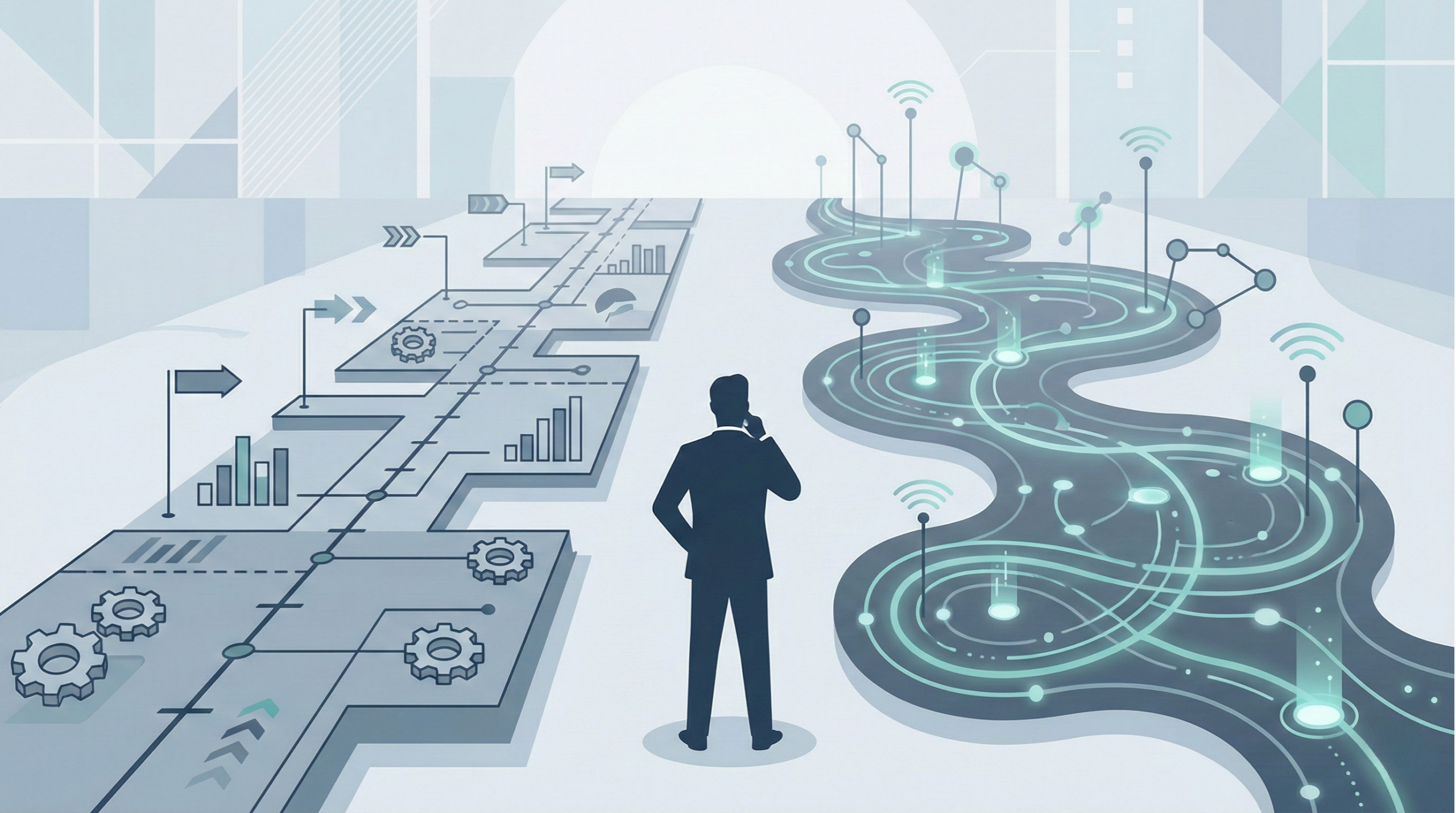
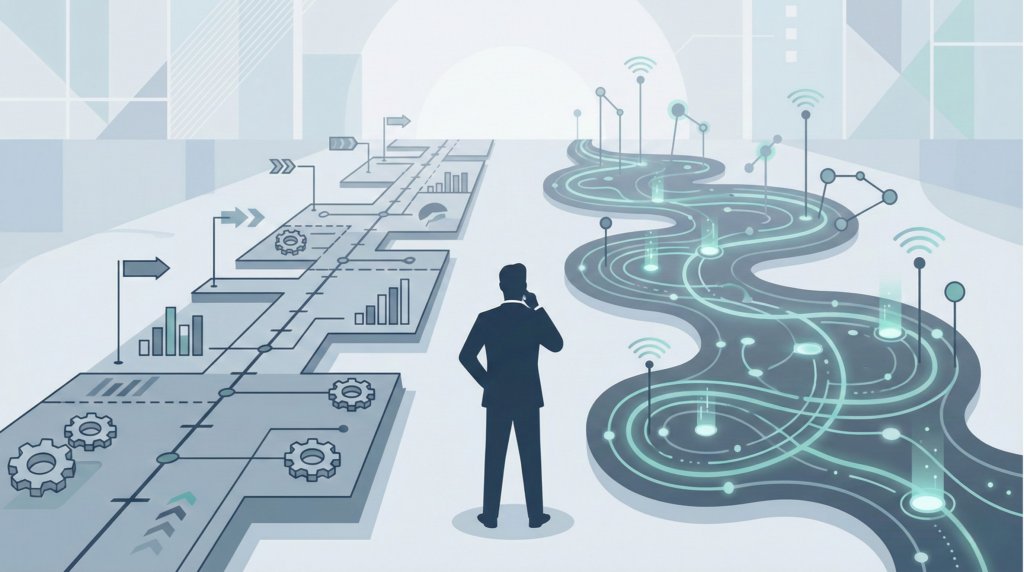
Product growth strategy in the age of AI is no longer about scaling features or optimizing funnels. It is about building intelligent systems that learn faster than markets change.
For product leaders, founders, and business heads, AI has transformed growth from a predictable roadmap into a continuous, adaptive process driven by experimentation, feedback, and leadership intent.
Introduction: Growth Is No Longer a Linear Game
For decades, product growth followed a familiar playbook. Define a roadmap, ship features, measure adoption, iterate quarterly, and scale what works. This approach powered some of the world’s most successful digital products.
But the rise of AI has fundamentally altered the pace, scale, and nature of growth itself.
Today, growth is no longer a linear journey driven by static roadmaps. It is a continuous, intelligence-driven system where experimentation happens faster than planning cycles, feedback arrives in real time, and competitive advantages are increasingly temporary.
For product leaders, founders, and business heads, the question is no longer “How do we grow?”
It is “How do we stay relevant when growth itself is being automated, accelerated, and redefined?”
This article explores why traditional growth thinking falls short in the AI era, what leadership mindset shifts are required, and the new questions every product leader must start asking now.
A strong product growth strategy in the age of AI prioritizes learning velocity over launch velocity.
Without rethinking product growth strategy in the age of AI, organizations risk optimizing locally while falling behind strategically.
Product growth strategy in the age of AI requires leaders to rethink how decisions, experiments, and feedback loops are designed.
Traditional Growth Thinking vs AI-Era Growth
The Old Growth Model
Traditional product growth models were built on predictability and control:
- Growth driven by feature launches and release cycles
- Decisions based on historical data and lagging metrics
- A/B testing limited by time, traffic, and tooling
- Clear separation between product, marketing, and analytics teams
This model worked when user behavior changed slowly and market signals were easy to interpret.
But AI has collapsed those assumptions.
The AI-Era Growth Model
In the age of AI, growth behaves more like a living system:
- Signals emerge continuously, not quarterly
- Experiments can be run, evaluated, and adjusted daily
- Personalization scales automatically, not manually
- Competitive differentiation shifts faster than org charts
AI doesn’t just optimize growth channels — it reshapes how growth decisions are made.
Traditional models struggle because product growth strategy in the age of AI depends on continuous learning rather than fixed roadmaps.
Growth is no longer about finding one winning strategy. It is about building systems that learn faster than the market changes.
Faster Experimentation and Continuous Feedback Loops
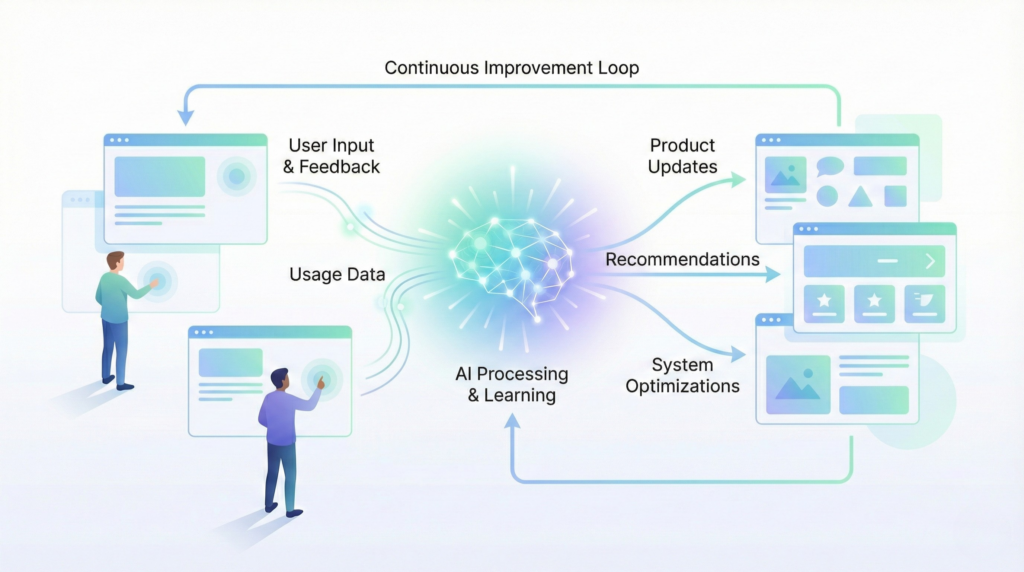
One of the most profound changes AI brings to product growth is speed — not just speed of execution, but speed of learning.
From Periodic Testing to Continuous Learning
In traditional growth models, experimentation was expensive:
- Tests required engineering time
- Results took weeks to validate
- Insights often arrived too late to act on
AI compresses this cycle dramatically.
With AI-powered experimentation, product teams can:
- Test multiple hypotheses simultaneously
- Adjust experiences in near real time
- Detect behavioral shifts before metrics decline
Growth becomes less about “launch and learn” and more about “sense and adapt.”
Feedback as a Strategic Asset
In AI-era products, feedback is no longer limited to surveys or dashboards. It includes:
- Usage patterns
- Behavioral anomalies
- Drop-off signals
- Engagement micro-moments
The leaders who win are not those with more data, but those who build organizations capable of interpreting and acting on feedback faster than competitors.
This evolution aligns closely with system-level thinking explored in our Vibe Coding article, where product teams move from writing more code to designing smarter growth systems.
Leadership Mindset Shifts Required for AI-Driven Growth
AI does not fail because of technology limitations. It fails because leadership mindsets lag behind.
From Control to Enablement
Traditional leadership emphasized predictability, control, and approval chains. AI-driven growth demands the opposite:
- Empowered teams instead of gated decisions
- Guardrails instead of rigid rules
- Principles instead of prescriptions
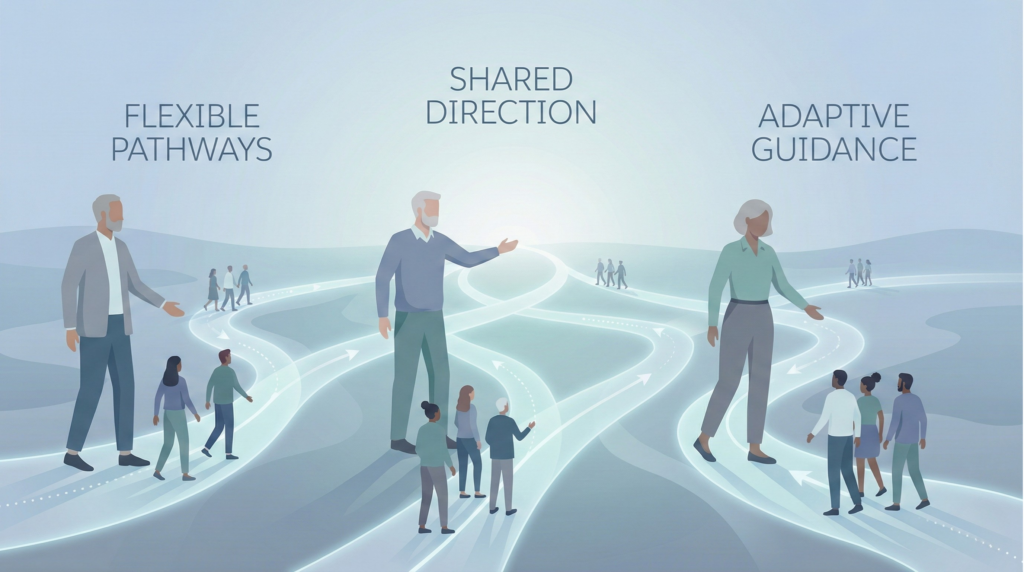
Leaders must shift from being decision-makers to system designers.
From Outputs to Outcomes
In an AI-enabled environment, shipping more features does not guarantee growth. Leaders must refocus teams on:
- Customer outcomes over roadmap velocity
- Learning speed over delivery speed
- Adaptability over optimization
This mindset aligns closely with the emerging philosophy behind Vibe Coding, where teams focus less on writing more code and more on shaping systems that continuously improve through feedback and intent.
A successful product growth strategy in the age of AI demands leadership that enables systems instead of controlling outcomes.
This shift toward system-level thinking is also explained in our detailed Vibe Coding blog, which explores how modern product teams design adaptive growth systems.
New Growth Questions Product Leaders Must Ask
AI does not provide answers — it forces better questions.
In the AI era, product leaders must move beyond traditional KPIs and ask:
1. Where Are We Learning Slower Than Our Users Are Changing?
Markets now evolve in weeks, not years. Leaders must identify friction in learning loops before growth stalls.
2. Which Decisions Should Humans Make — and Which Should Systems Handle?
Not every decision needs automation. Strategic clarity lies in knowing where human judgment creates leverage.
3. How Do We Prevent Local Optimization From Hurting Long-Term Value?
AI excels at short-term optimization. Leaders must ensure systems align with long-term trust, brand, and user value.
4. Are We Measuring What Matters — or What Is Easy to Measure?
AI can surface insights, but leadership must define what success truly means.
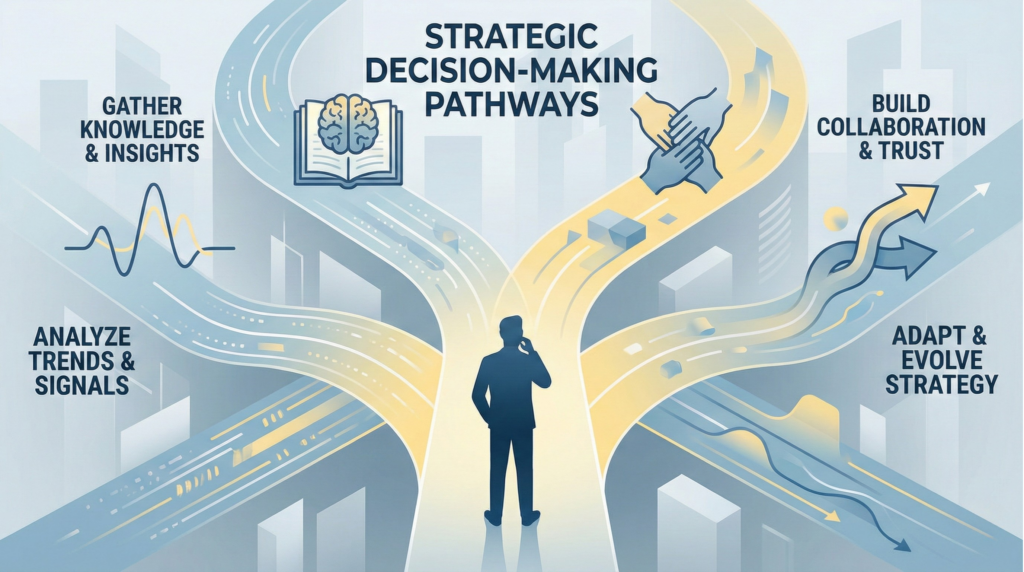
These questions shift growth conversations from tactics to intent, from execution to direction.
The Future Outlook: Growth as a Living System
Looking ahead, the most successful products will not be defined by features or funnels. They will be defined by how quickly and responsibly they evolve.
AI will increasingly handle execution, optimization, and personalization. Human leadership will be judged by:
- The clarity of vision they set
- The systems they design
- The ethical and strategic boundaries they establish
Growth will no longer be a department. It will be an organizational capability embedded into how products think, learn, and respond.
Without evolving product growth strategy in the age of AI, even strong products risk becoming irrelevant in fast-changing markets.
For product leaders, the mandate is clear:
Rethinking growth is no longer optional. It is the price of staying relevant in the age of AI.
According to McKinsey research, AI is transforming how organizations develop and execute strategy, accelerating insights and enhancing decision quality across leadership teams. Harvard Business Review also says that AI-first leadership — where leaders blend human judgment and AI capabilities — is essential for long-term growth and adaptability.
Source: McKinsey and HBR